
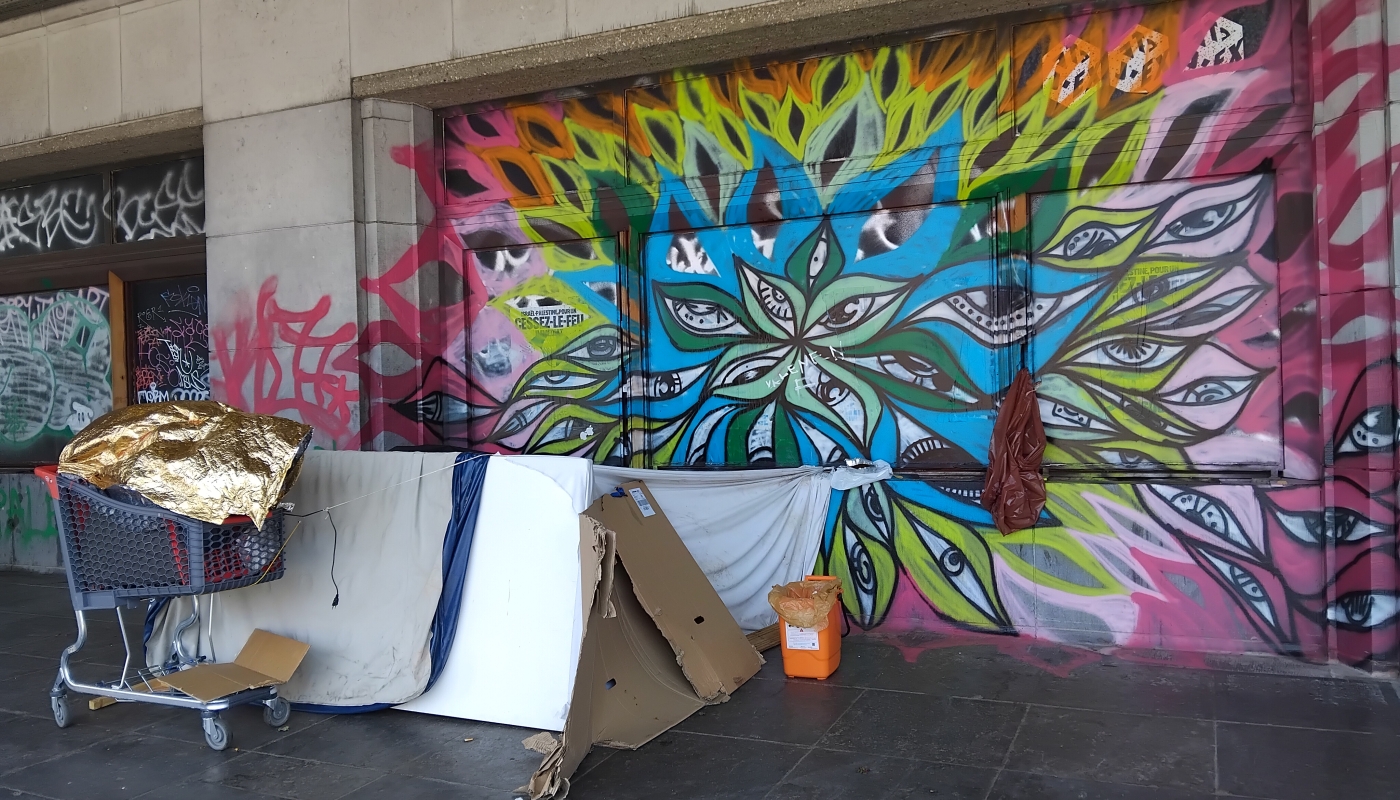
Making an appointment, attending a consultation, continuing treatment: these steps can become real obstacles when you live on the streets. On 10 October, which marks both World Mental Health Day and World Homeless Day, Street Nurses invites us to look at what keeps people experiencing homelessness from accessing care and what can help bring them closer to it.
The links between mental health and homelessness are complex and work in both directions. Mental health conditions can destabilise a person’s life. Living on the streets can also cause or worsen distress, particularly through insecurity, isolation or a lack of rest. Every story is different, and so are people’s care needs.
At Street Nurses, we see how difficult it can be to find support that takes these realities into account. Some people seek care without finding a place, whether in a psychiatric institution, a specialised facility (such as a psychiatric nursing home or a supported living initiative) or simply an outpatient service. Others face admission criteria that leave them without a solution.
A few figures
Data on the mental health of people experiencing homelessness remains scarce and probably reflects only part of the reality. Some conditions go unnoticed because no diagnosis has been made, and people who are furthest from support services may also be missed by surveys. The figures must therefore be interpreted with caution, particularly as they sometimes reflect suspected difficulties rather than a confirmed medical diagnosis.
Nevertheless, they give an indication of the scale of the needs. In Brussels, the November 2024 count recorded a known or suspected mental health issue among 17% of the people for whom a questionnaire was completed. In the counts conducted in 2025 in the Liège area and the districts of Huy-Waremme and Tournai-Mouscron, this proportion reportedly ranged from 17% to 27%, depending on the area. These findings describe local situations and do not provide a comprehensive measure of mental health conditions among people experiencing homelessness.
Two problems, two refusals
A person facing both mental health difficulties and addiction may be turned away by a mental health service because of their substance use, and by an addiction service because of their mental health conditions. They need help with several problems at once. Yet this combination becomes an obstacle to receiving support.
These refusals raise questions about the boundaries between specialisms. What happens to someone when each of their problems is a reason for rejection by a different service? Our teams keep looking for a place that will accept them. Meanwhile, their needs remain unmet.
A lack of available places makes these difficulties worse. In a survey conducted in 2022–2023 among 18 Brussels mental health services, only a quarter of recorded requests resulted in an offer of support. This figure concerns all the people using these services, not only those experiencing homelessness. It shows just how difficult access is in an overstretched sector.
Patrick, aged 50, moves repeatedly between the streets, housing, hospital, prison and shelters. At the time of his interview, he explains that he is on two waiting lists for psychological support:
“I knew it was difficult to find a psychiatrist. But that it was just as difficult to find a psychologist, that’s what I’m starting to realise. Honestly, I didn’t know they were that overwhelmed.”
He is clearly asking for help. Yet he waits.
Professionals look for solutions with limited resources. To support people facing several difficulties at once, they need time to work across mental health, addiction and social support teams. Service managers must also be able to review admission criteria that exclude these people, with support from the public authorities that fund care.
Reaching out
Even before finding an available place, you need to know where to look.
Milo, aged 57, has been living on the streets for more than 3 years, after moving back and forth between the streets and housing unfit for habitation. He points out:
“When you’re on the streets, you’ve never seen a psychologist. You have to find one first.”
Other people stop asking for help after being turned away or having difficult experiences with institutions. Fear, mistrust or difficulty putting their distress into words can also keep them away from care.
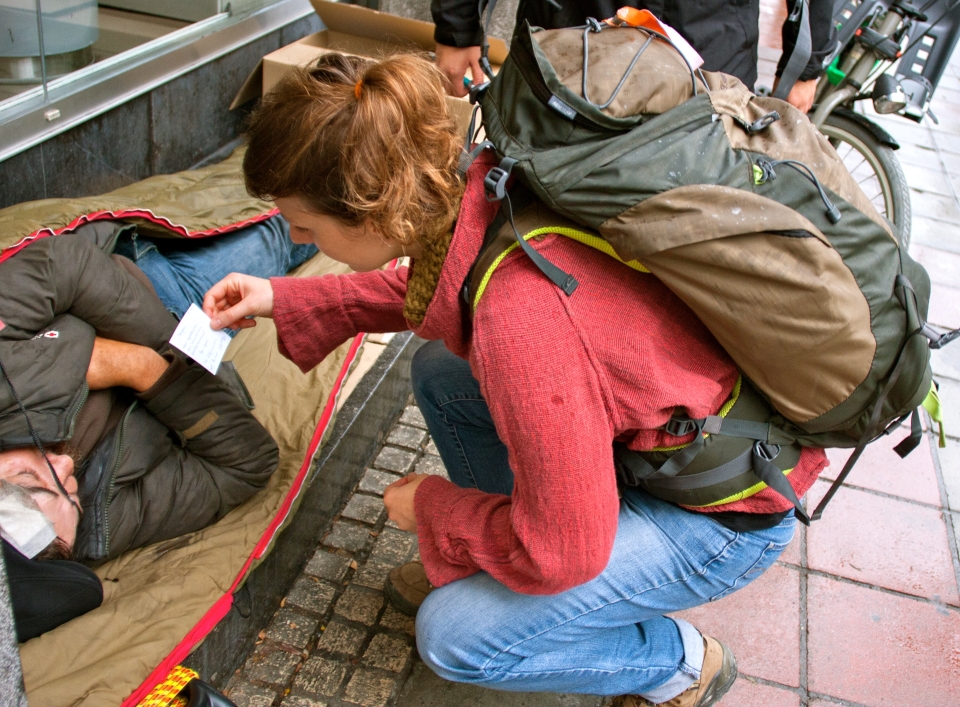
A professional who reaches out to them can make an initial contact possible. A team they already know can help facilitate that meeting. Building trust then takes time, while respecting the person’s choices and pace. One missed appointment should not be enough to break that connection.
This work outside the consulting room is part of making care accessible. It needs sustained funding and support.
Where can you go after hospital?
Without a housing solution on discharge, a hospital stay can lead to someone becoming homeless for the first time, particularly if they have lost their home during their stay. For those who were already experiencing homelessness, it can end in a return to the streets. So what happens on discharge when you have no home?
Depending on their needs, a person may require somewhere to recover, a place in aftercare or accommodation where they can continue receiving care. For others, the solution will be housing with support.
Preparing handovers between teams is essential. But a coordination meeting does not create an available place. Without housing or somewhere to stay, discharge can lead to a return to the streets and jeopardise continuity of care. This continuity is essential to recovery; without it, the risk of relapse is high.
The testimony of Irène, aged 53 and living on the streets for more than 10 years, illustrates this problem:
“I have an appointment for alcohol treatment, but I’ve forgotten the date. It’s just the appointment, the intake appointment. But then I have to wait until there’s a place for me. How long will I have to wait? Because when I leave hospital, where am I going to go?”
At Street Nurses, we advocate for access to stable, suitable housing, with the support each person needs. Care and recovery facilities should respond to a need, without becoming mandatory steps before someone can have a home of their own.
On this 10 October, World Mental Health Day and World Homeless Day, we underline that access to care and access to housing are closely connected. We call on the public authorities that organise and fund care to give services the resources to support people facing both severe hardship and mental health difficulties, and to fund accommodation options after hospitalisation, linked to access to housing.
Accessing care and continuing to receive it must be possible even when you have no home.