
Every year on December 10, the world marks Human Rights Day. In 1948, the United Nations General Assembly adopted the Universal Declaration of Human Rights — a landmark document enshrining the basic rights of every individual and placing responsibility for their protection in the hands of governments.
77 years later, these rights are still being challenged — and far too often violated.
The Right to Housing: Enshrined, but Not Enforced
Among the 30 rights and freedoms proclaimed in the Declaration is the right to housing, found in Article 25. This fundamental right also appears in the Belgian Constitution (Article 23). Yet in practice, this right is not enforceable in Belgium: individuals cannot claim it in court, and public authorities carry the obligation to implement it.
A Deepening Housing Crisis in Belgium
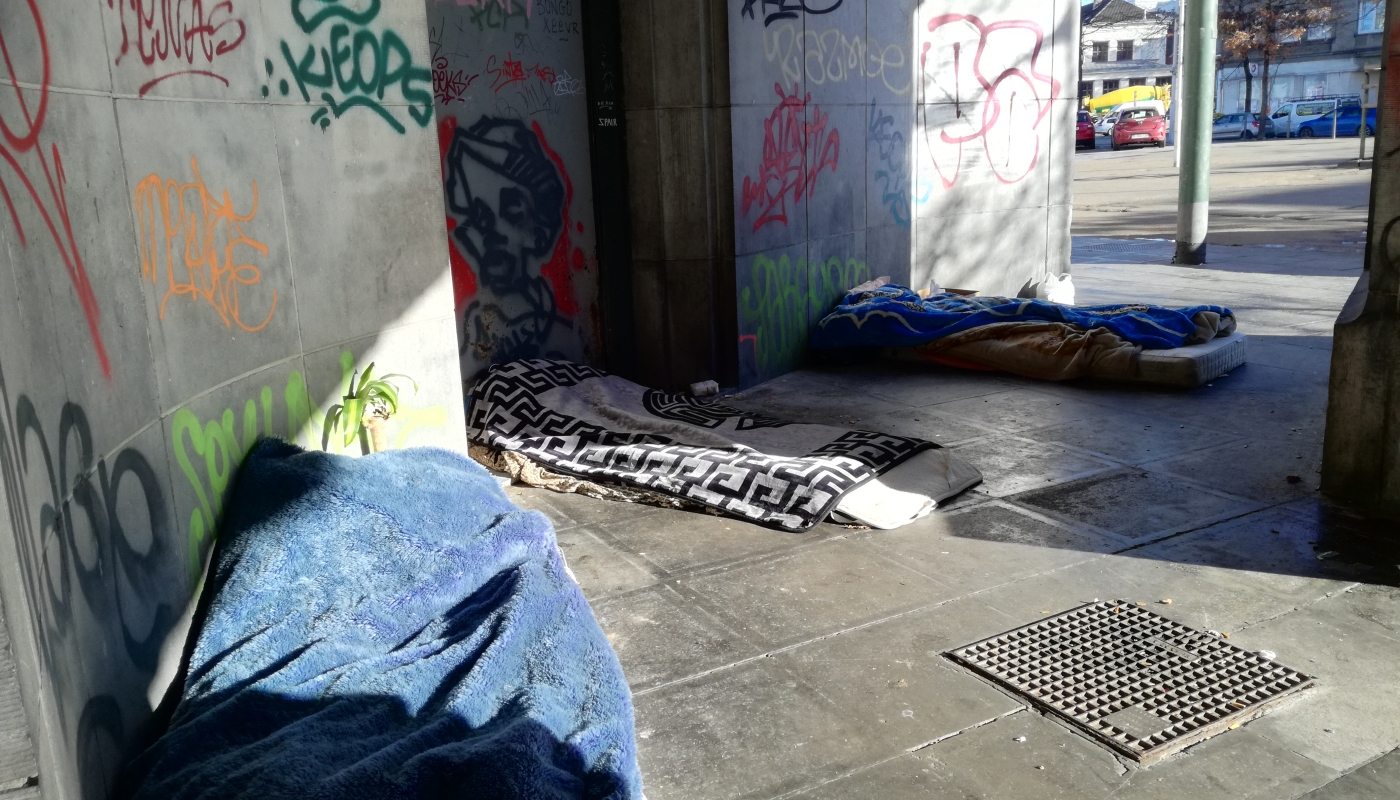
Today, nearly 50,000 people in Belgium remain without housing. Children sleep in the streets. People die there every year.
At the same time, hundreds of thousands are on waiting lists for social housing across the country’s three regions. Others live in unsafe, degrading conditions, exposed to health risks in substandard housing rented by unscrupulous landlords.
Expanding Public Housing Is Essential
The first and most urgent step is to increase the production and renovation of public housing. Currently, only 7% of Belgium’s housing stock qualifies as social housing — not nearly enough to ease pressure on the rental market. This allows rent prices in major cities to climb unchecked.
Ensuring access to housing for all also means implementing real rehousing solutions for people experiencing homelessness.
Rehousing in Brussels: The Power of a Quota
This year in Brussels, thanks to advocacy by Street Nurses and partner organisations, a new quota was introduced: 6% of social housing per provider must be reserved for people experiencing homelessness by 2027.
This is vital when we consider that the path to social housing can take years — involving long waiting lists and complex administrative steps. For someone living on the street, these obstacles can be insurmountable. Meanwhile, life expectancy for people experiencing homelessness remains tragically low: between 45 and 50 years.
Giving access to social housing means sustaining Housing First policies — proven effective with reintegration success rates over 85%.
Wallonia: Action Still Lacking
It is urgent that this quota system also be implemented in the Walloon Region, where demand keeps rising: nearly 49,945 people are currently registered on waiting lists, and almost 19,387 have no home.
Wallonia has 62 public housing companies managing around 103,293 housing units. In theory, two mechanisms allow for the rehousing of people experiencing homelessness through these companies — but actual implementation remains minimal. Currently, only 61 housing units across the entire region are made available for Housing First projects via Relais Sociaux. That’s just 0.06% of the public housing stock.
A Collective Duty to Guarantee the Right to Housing
To achieve the goals set nearly a century ago and to make the right to housing real, we must accelerate our efforts. The right to affordable, decent housing is more than a right — it’s a collective responsibility.
Housing is a basic human need and should not be treated as a commodity subject to market forces. To live with dignity, people need housing that is safe, sustainable and affordable.
On this December 10, let’s remember: the work to guarantee human rights — in Belgium and beyond — is far from over. And among those rights, housing remains the foundation for so many others.